
Support Automation
Slack-First Support Automation and Admin Portal for Accelerant
How we built a connected system combining an internal admin portal with a Slack-based support app to centralize machine history and streamline issue resolution for Accelerant.
Project Overview
Accelerant provides machine parts and ongoing support for installed equipment, where post-installation service becomes critical. As customer queries, troubleshooting, and machine-related changes increased, support workflows became fragmented across emails, chats, and internal tools. We built a connected system combining an internal admin portal with a Slack-based support app to centralize machine history and streamline issue resolution, resulting in faster issue handling, improved self-service resolution, and a scalable support process.
Why Slack-First Support
A traditional ticketing-only system would not solve the problem, most customer interactions were already happening in Slack. Instead of forcing users into a new workflow, we brought structured support into Slack while keeping internal operations centralized in a dedicated admin portal. This ensured minimal disruption for customers while giving the support team the context and control they needed.
System Architecture
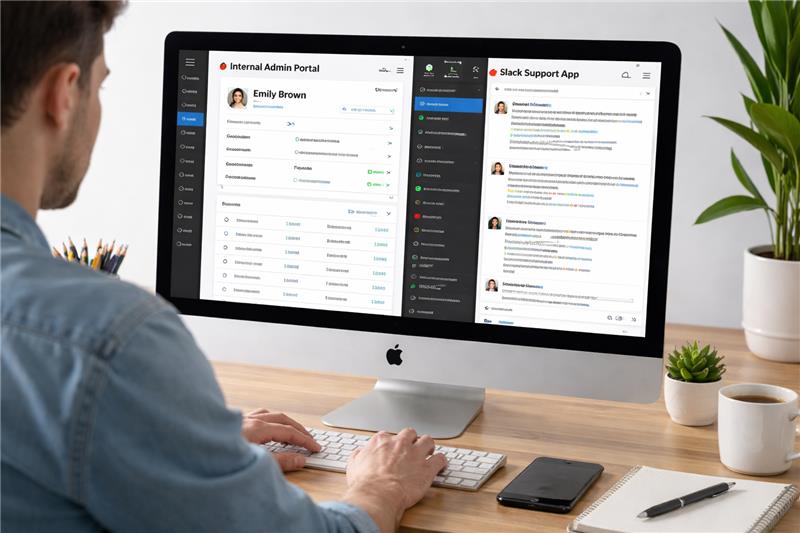
The platform consists of two tightly integrated layers: an internal admin portal and a Slack-based support interface. The admin portal manages customers, machines, and lifecycle history, while the Slack app handles guided troubleshooting, knowledge base suggestions, and escalation workflows. A ticketing layer connects both systems, ensuring every issue is tracked, updated, and visible to the team.
Key Technical Decisions
We used Next.js for a responsive frontend and NestJS for scalable backend services across both the admin portal and Slack app. PostgreSQL served as the central data store for structured machine and customer data. AI capabilities powered by OpenAI and Pinecone enabled contextual suggestions based on historical data and documentation. Redmine was integrated for structured ticket management, ensuring every issue transitions smoothly from chat to tracked work.
Client Objectives
The engagement was guided by clear objectives that defined success for business leadership and delivery teams.
Centralized Data Management
Create a single source of truth for customers, machines, and service history.
Improve Support Efficiency
Reduce back-and-forth communication by guiding customers through structured issue reporting.
Enable Self-Service Support
Allow customers to resolve common issues through automated suggestions and workflows.
The challenge
Complex constraints hindering growth
Scattered Communication Channels
Customer issues were spread across emails, Slack messages, and manual follow-ups, making it hard to track conversations.
Lack of Machine Context
Support teams struggled to access complete machine history, including replacements and service records.
Unstructured Issue Reporting
Customers often provided incomplete information, leading to delays and repeated clarification.
Dropped or Delayed Issues
Without structured tracking, some issues were missed or lacked proper follow-up.
The solution
Connected Support Platform
An integrated admin portal and Slack-based support app powered by AI for contextual troubleshooting and automated ticket management.
Admin Portal Development
Built a centralized system to manage customers, machine inventory, and lifecycle history, giving support teams full operational visibility.
- Next.js
- NestJS
- PostgreSQL
Slack Support App
Developed an interactive Slack app that guides customers through issue reporting using structured inputs and automated workflows.
- Slack API
- Interactive UI
- Workflow Automation
AI-Powered Suggestions
Integrated AI to analyze customer input and provide relevant troubleshooting steps based on documentation and past issues.
- OpenAI
- Pinecone
- LangChain
Ticketing & Workflow Integration
Connected Slack interactions to Redmine for automatic ticket creation, updates, and follow-ups, ensuring no issue is lost.
- Redmine API
- Automation
- Notifications
Technologies Implemented
- Next.js
- NestJS
- PostgreSQL
- AWS
- OpenAI
- Pinecone
- Slack API
- Redmine
- Faster
- Issue Intake
- Reduced
- Back-and-Forth Communication
- Higher
- Self-Service Resolution Rate
- 1.5+
- Years of Continuous Delivery
Business impact
Measurable Business Impact
The integrated system transformed support operations from reactive and fragmented to proactive and structured.
Support Efficiency
- Faster
- Issue intake with structured inputs
- Reduced
- Back-and-forth communication
Customer Experience
- Higher
- Self-service resolution rate
- Faster
- Response and resolution times
Operational Visibility
- Centralized
- Machine and customer history
- Improved
- Tracking and ownership of issues
How we drive results
Turning Strategy into Measurable Business Impact
Our case studies reflect a consistent delivery model focused on outcomes, helping organizations modernize technology, reduce risk, and accelerate growth through practical, scalable solutions.
Outcome-Driven Strategy
Every engagement starts with clear business objectives, success metrics, and a roadmap aligned to real operational and financial outcomes.
Proven Execution Model
We apply proven frameworks, agile delivery, and industry best practices to execute complex initiatives with speed, quality, and predictability.
Secure & Scalable Delivery
Our solutions are built with security, compliance, and scalability at the core, ensuring long-term resilience and sustainable growth.
Ready to Streamline Your Support Operations?
From fragmented workflows to intelligent automation, let us build a connected support system that scales with your business.
Optimize Your Support