
Modern digital products must feel instant. Users expect dashboards to load fast, search results to appear immediately, and listings to refresh without delay. But as data grows and traffic increases, backend APIs often slow down, especially when they repeatedly query the database. One of the most cost-efficient ways to improve performance - without rewriting core logic - is to introduce Redis caching. This article explains why Redis improves performance, how it integrates into a NestJS backend, and what business results it delivers.
1. Why Performance Matters for the Business
When an API becomes just 200–400ms slower, users feel the lag. This creates:
Higher bounce rate
Lower conversion
Increased server costs
Poor user satisfaction
By applying Redis caching correctly:
API response times drop by 20x
Infrastructure cost reduces by 30–60%
User satisfaction and retention increase
System can handle 2–5x more concurrent users
This is one of the highest ROI upgrades for any backend.
2. What Is Redis Caching (Explained Simply)
Project Information
Client:
Maurizio
Location:
Canada
Project duration:
3 -6 Months
Technologies used:
Nextjs, Nestjs
Website:
https://arcadiaacademyofmusic.com/
Redis is an in-memory data store.It keeps frequently requested data in RAM rather than hitting the database each time.This reduces load on servers and makes APIs extremely fast.
3. How Data Flows with Redis (High-Level Architecture)
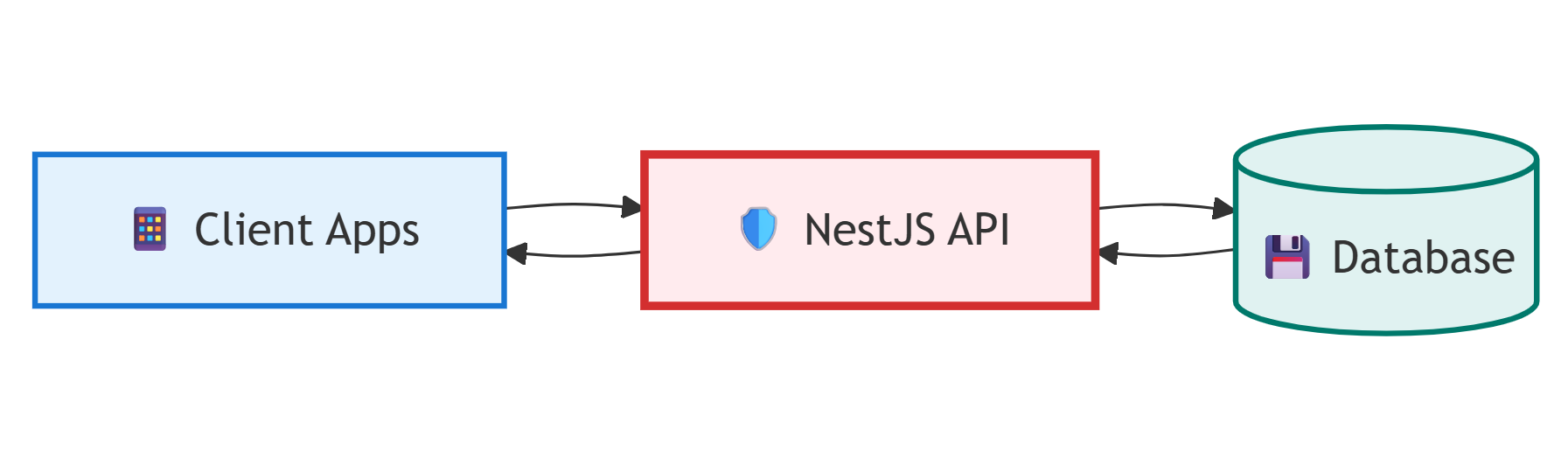
Without Cache - Every request hits the database → slow & expensive.
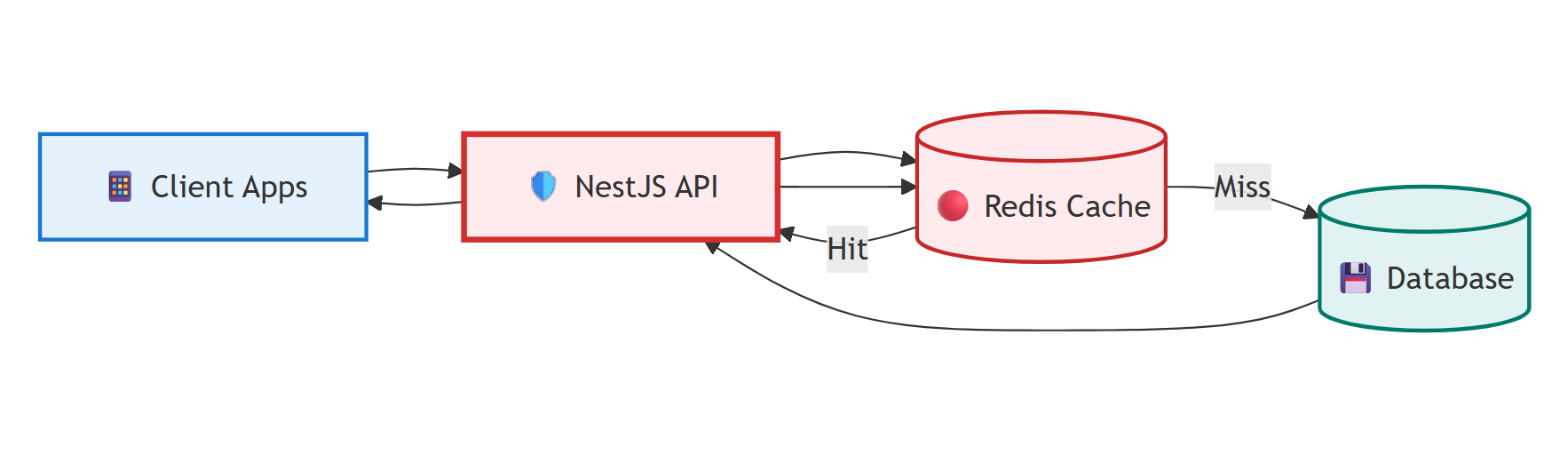
With Redis Cache - Now Redis handles most repeated queries → faster responses.
Business Value Flow - A simple technical improvement triggers a chain of business gains.

4. Before vs After Optimization
Response Time
| Operation | Before | After Redis |
|---|---|---|
| Product list API | 180–350ms | 5–10ms |
| Search results | 200–400ms | 6–12ms |
| Dashboard stats | 2.5–3s | 50–75ms |
Cost Impact
| Area | Improvement |
|---|---|
| DB CPU usage | ↓ 40–70% |
| DB reads | ↓ 50–90% |
| Server scaling cost | ↓ 30–60% |
User Experience
| Metric | Improvement |
|---|---|
| API throughput | ↑ 3–5x |
| Page load speed | ↑ 25–50% |
| Retention & satisfaction | ↑ measurable uplift |
5. How Redis Works in a NestJS API
We use the cache-aside pattern — the most common and reliable.
Client calls
GET /productsNestJS checks Redis
If data is found → return instantly
If not → call database → store in Redis → return
When data is updated → clear cache key
This pattern ensures:
No stale data
No breaking changes
Easy to maintain
Works at any scale
6. Minimal Technical Example
    async getProducts() {
  const key = 'products:list';

  const cached = await this.redis.get(key);
  if (cached) return cached;

  const data = await this.prisma.product.findMany();
  await this.redis.set(key, data, 120); // Cache for 2 minutes

  return data;
}
This tiny change can save thousands of database calls per minute.
7. Why Redis Is a Business-Friendly Optimization
1. Low Cost, High ROI
Adding Redis costs far less than upgrading DB servers or adding CPUs.
2. No Rewrite Needed
Your team keeps existing logic, just adds a caching layer.
3. Predictable Performance
Even during traffic spikes:
Landing pages stay fast
Search results load instantly
Dashboards remain responsive
4. Better Scalability for Future Growth
Your API can handle 3–5x more load without additional hardware.
8. When Should a Business Enable Redis Caching?
Enable Redis if any of these are true:
The same data is requested repeatedly
Dashboard or listing API is slow
Database is under heavy read load
Users complain about slow pages
Traffic is expected to grow
You want to reduce cloud costs
Redis is ideal for:
Product catalogs
User account data
Booking calendars
Reports and analytics
CMS content
Search results
Dashboard widgets
9. Summary
Redis caching is a simple, safe, and high-ROI optimization that benefits both business and engineering teams.
Faster user experience
Lower server cost
Higher stability
Better scalability
Faster time-to-market for new features
Reduced DB load
Sub-millisecond lookups
Clean, reusable caching logic
Transparent auto-invalidation