
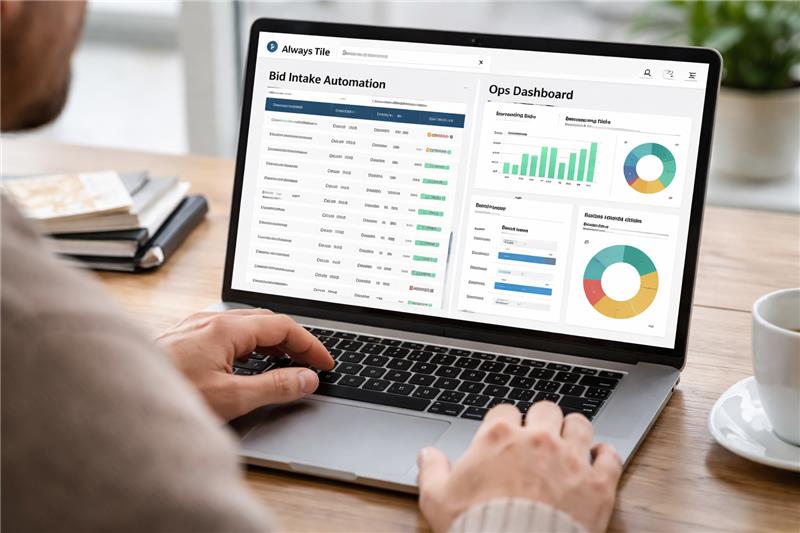

Automating bid intake for Always Tile & Stone
Email processing, document retrieval, and a shared dashboard helped organize incoming invitations for estimators.
Always Tile & Stone
Turn your ideas into software that moves your business forward.
Product & platform development
We design and develop custom software, web and mobile applications, and digital platforms that help businesses solve problems and create new opportunities. From defining your product idea to building and scaling the final solution, we bring the technology and engineering expertise to make it happen.
Case study · Always Tile & StoneAutomating bid intake for Always Tile & StoneEach engagement started from a specific business task, and the software around it.
Email processing, document retrieval, and a shared dashboard helped organize incoming invitations for estimators.

We automated one flooring contractor’s bidding. Then they asked us to turn it into a platform. Here is how both moves went — and why the second one was the harder of the two.
The Butlermax assistant retrieves hotel information from existing services and routes unresolved questions to staff.
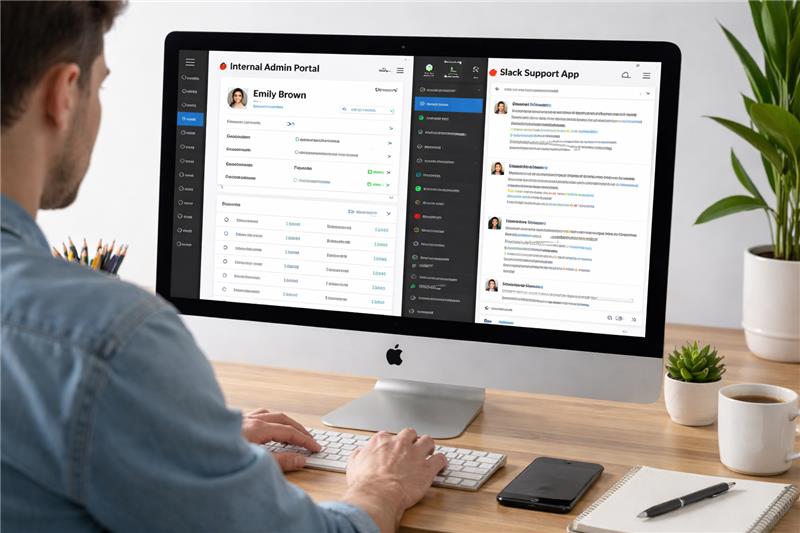
Accelerant connected Slack support, machine history, and an internal administration portal.
A phased migration brought four franchise publications onto a shared platform while retaining their individual brands.
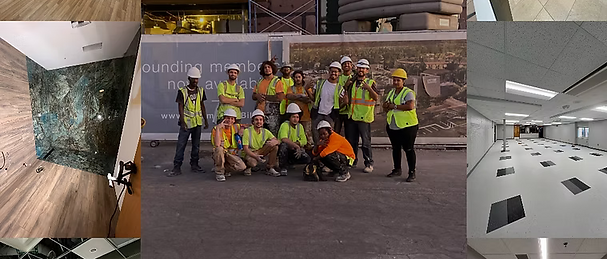
Always Tile & Stone connected email classification, project filing, and its bid tracker.
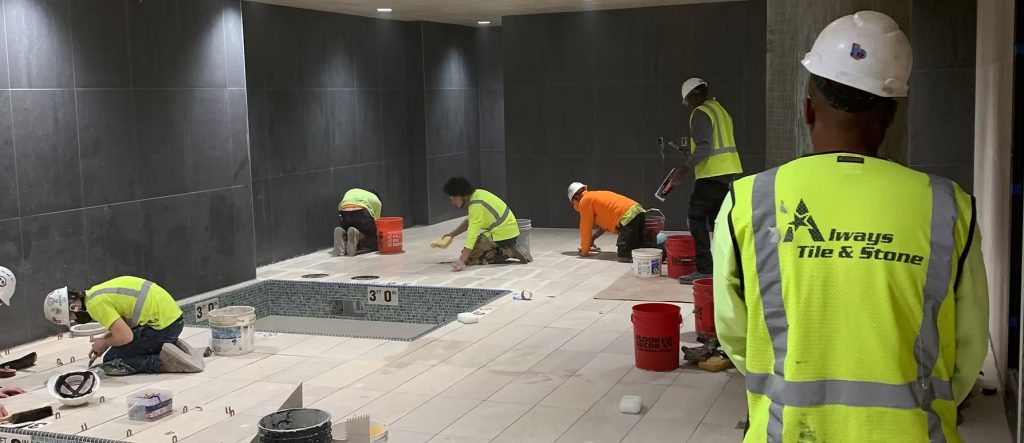
ATS introduced email automation before moving the estimating team to a custom bid management application.


Schedula connected clinic messages, appointment reminders, and patient booking.

Schedula supported location-based availability and changes to Dr. Kumar’s appointments.
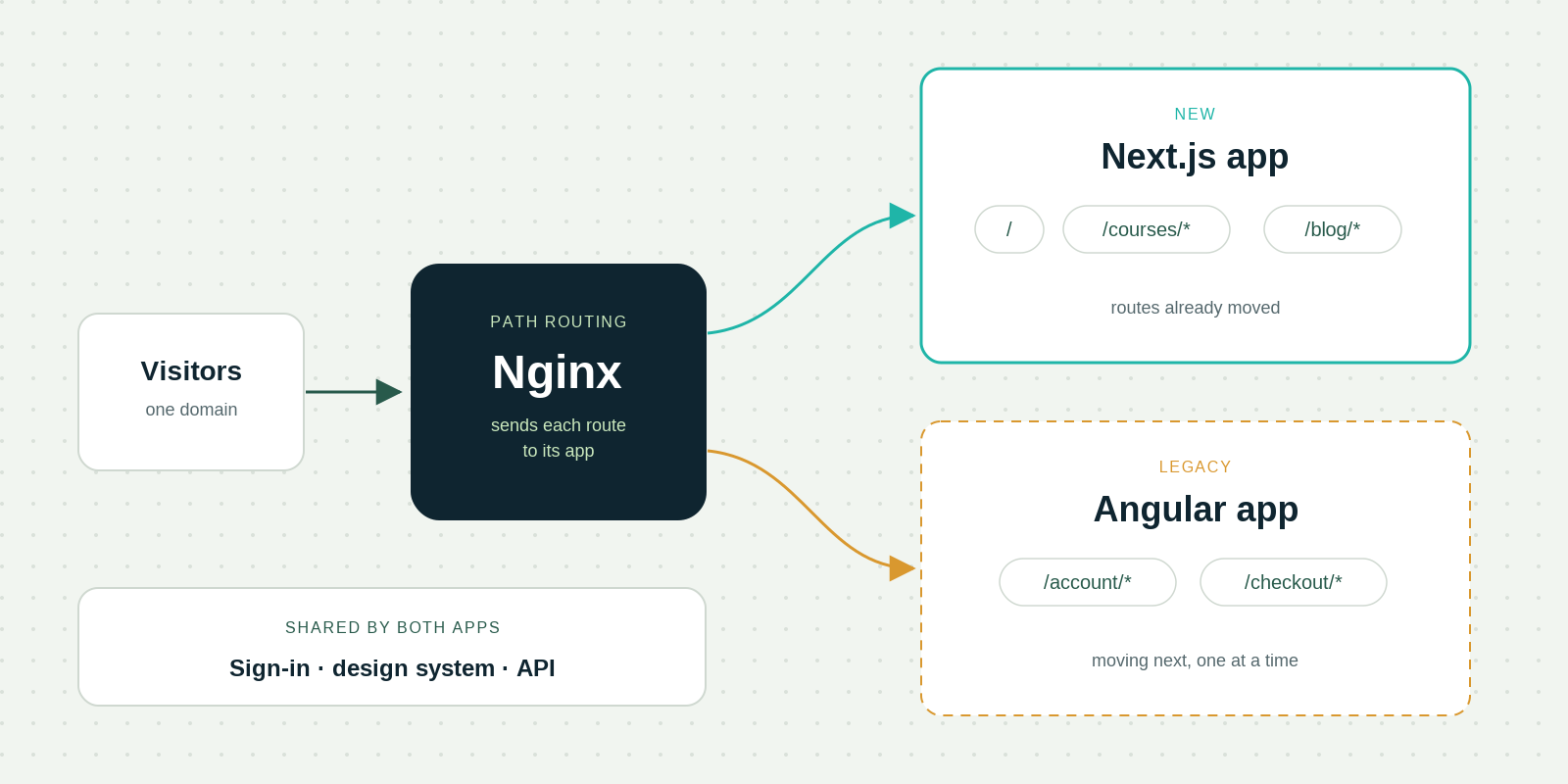

Nginx routing allowed Angular and Next.js applications to serve different parts of the same site.
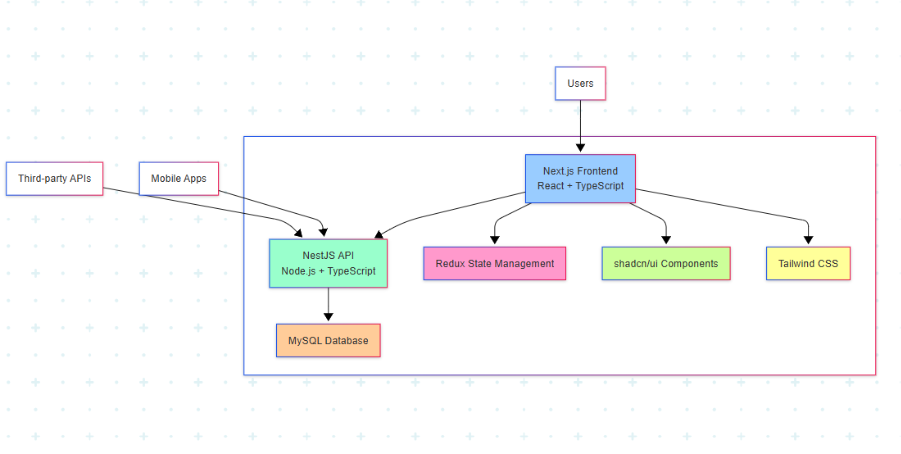
The academy introduced Next.js and NestJS alongside its existing application.
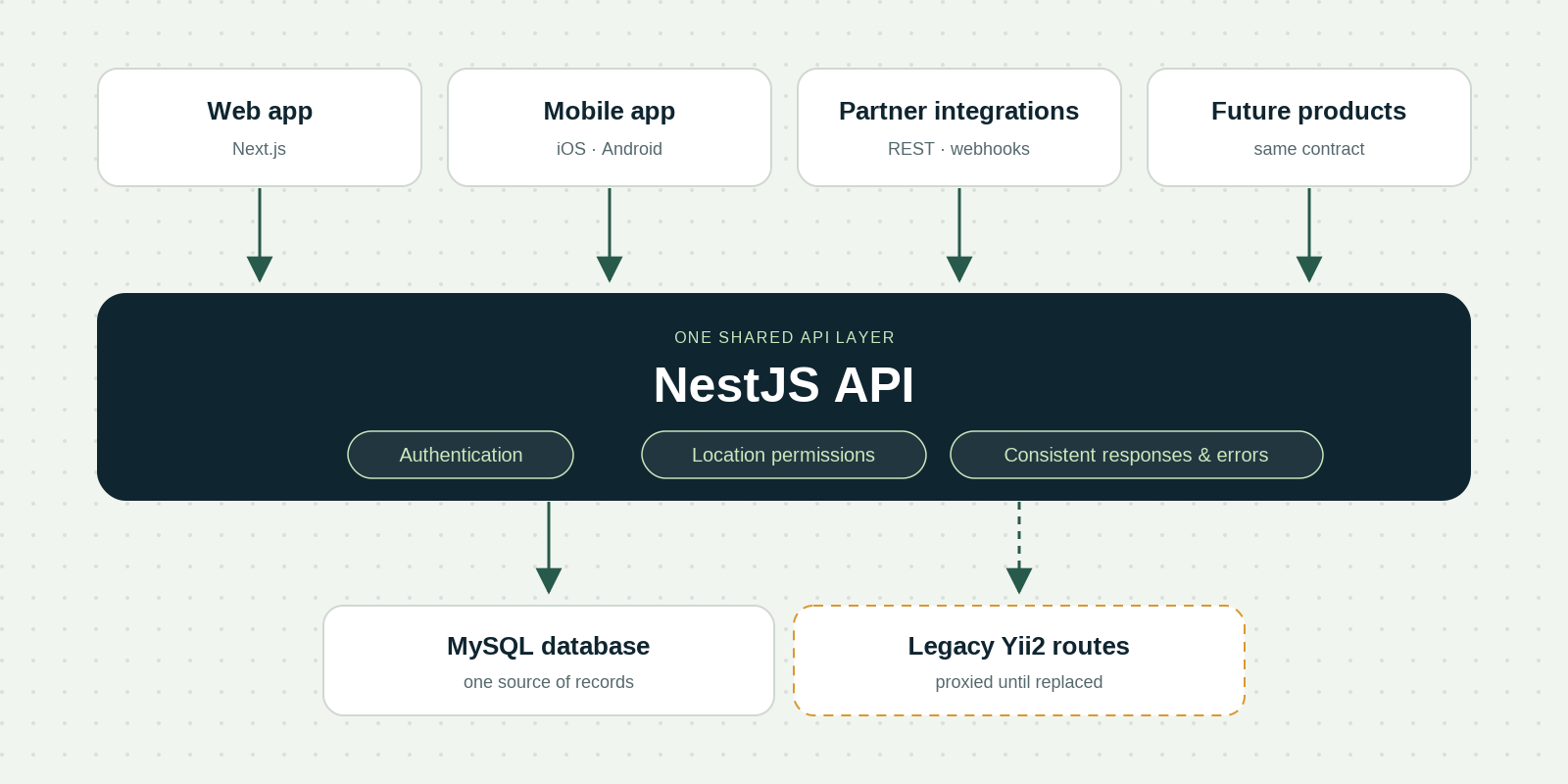
A NestJS API gave the academy a common backend for its web application and future integrations.
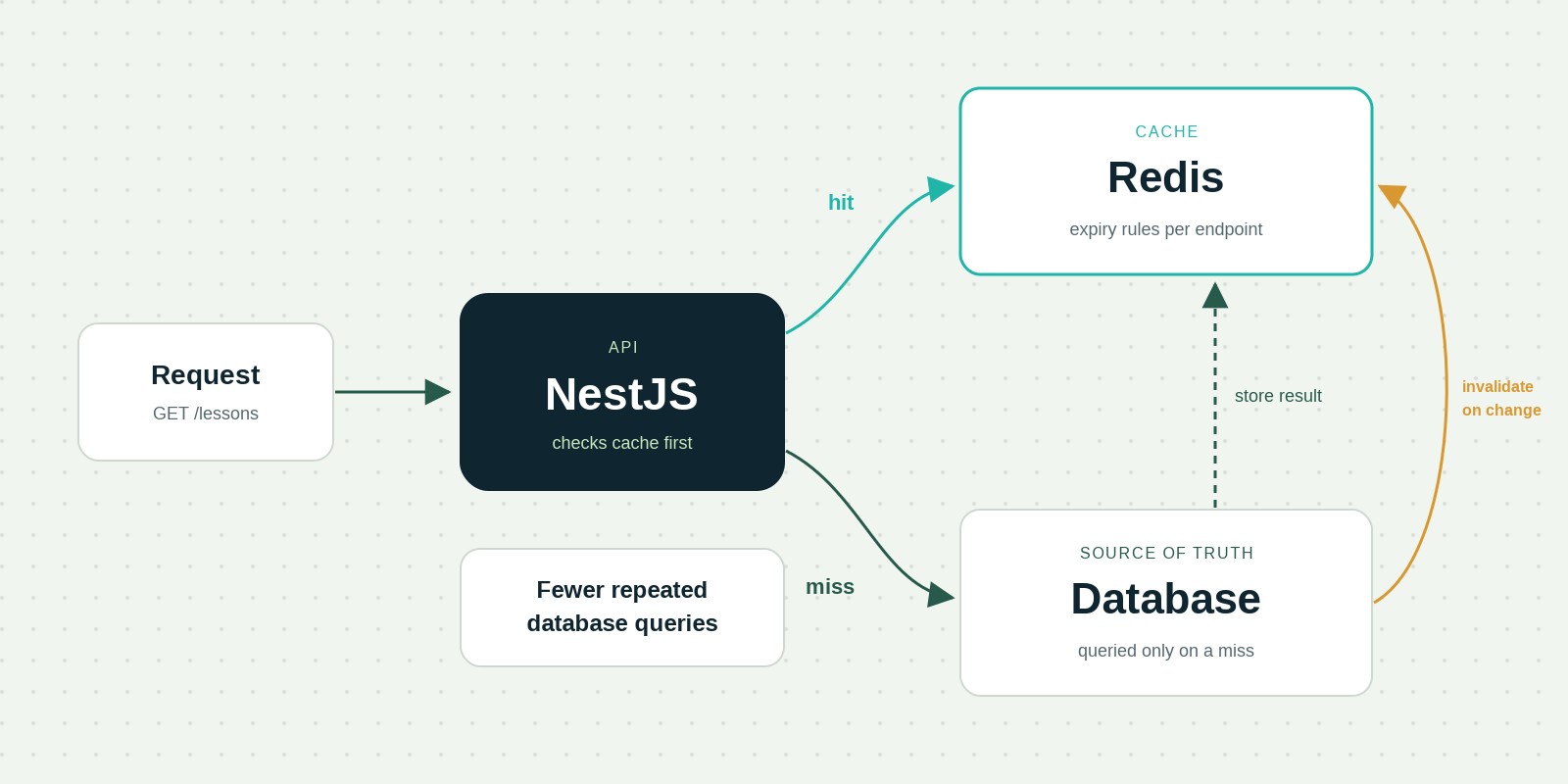
SMW Music Academy added caching to frequently requested NestJS endpoints.
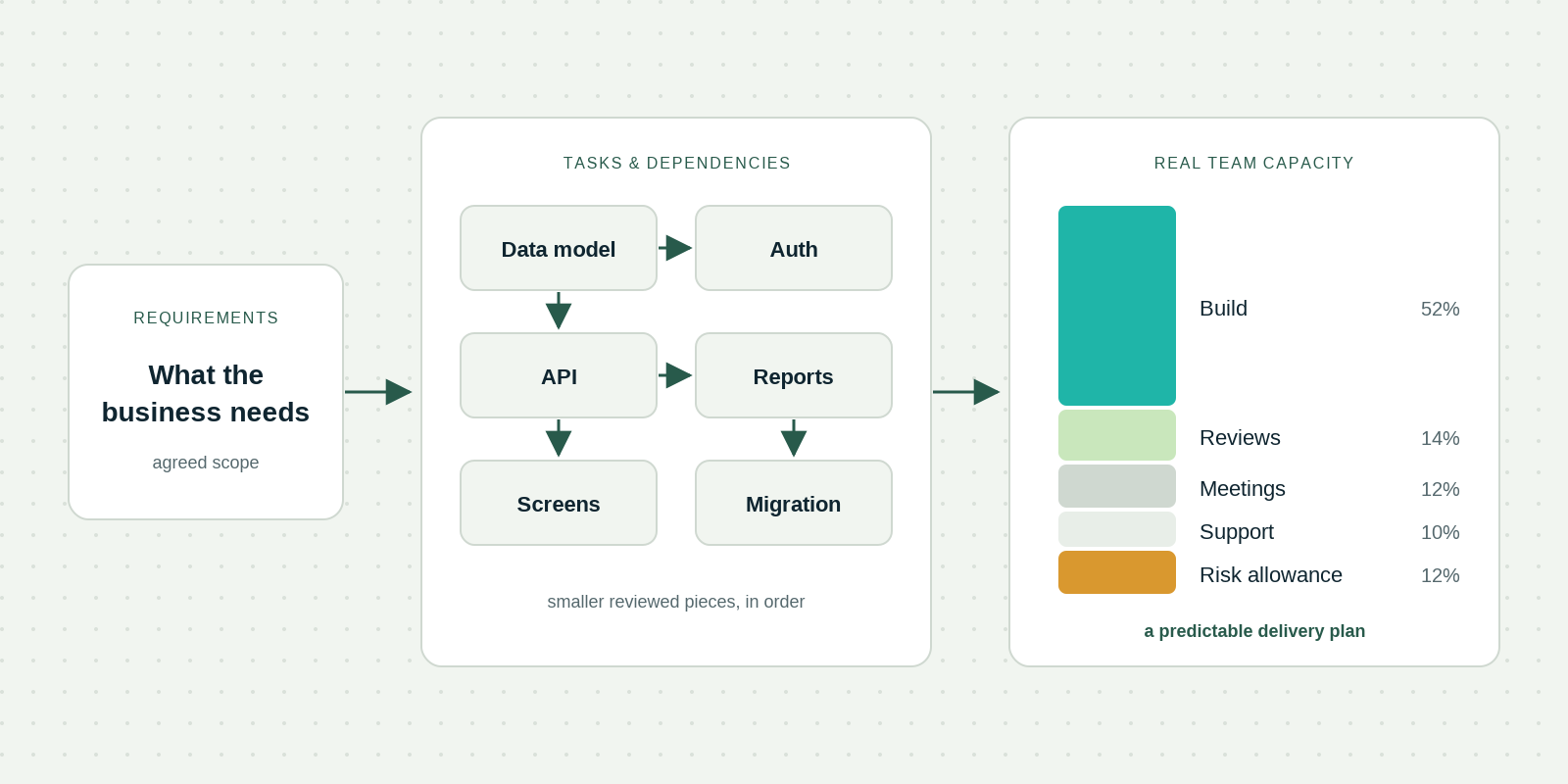
The team broke requirements into tasks, mapped dependencies, and planned against available capacity.
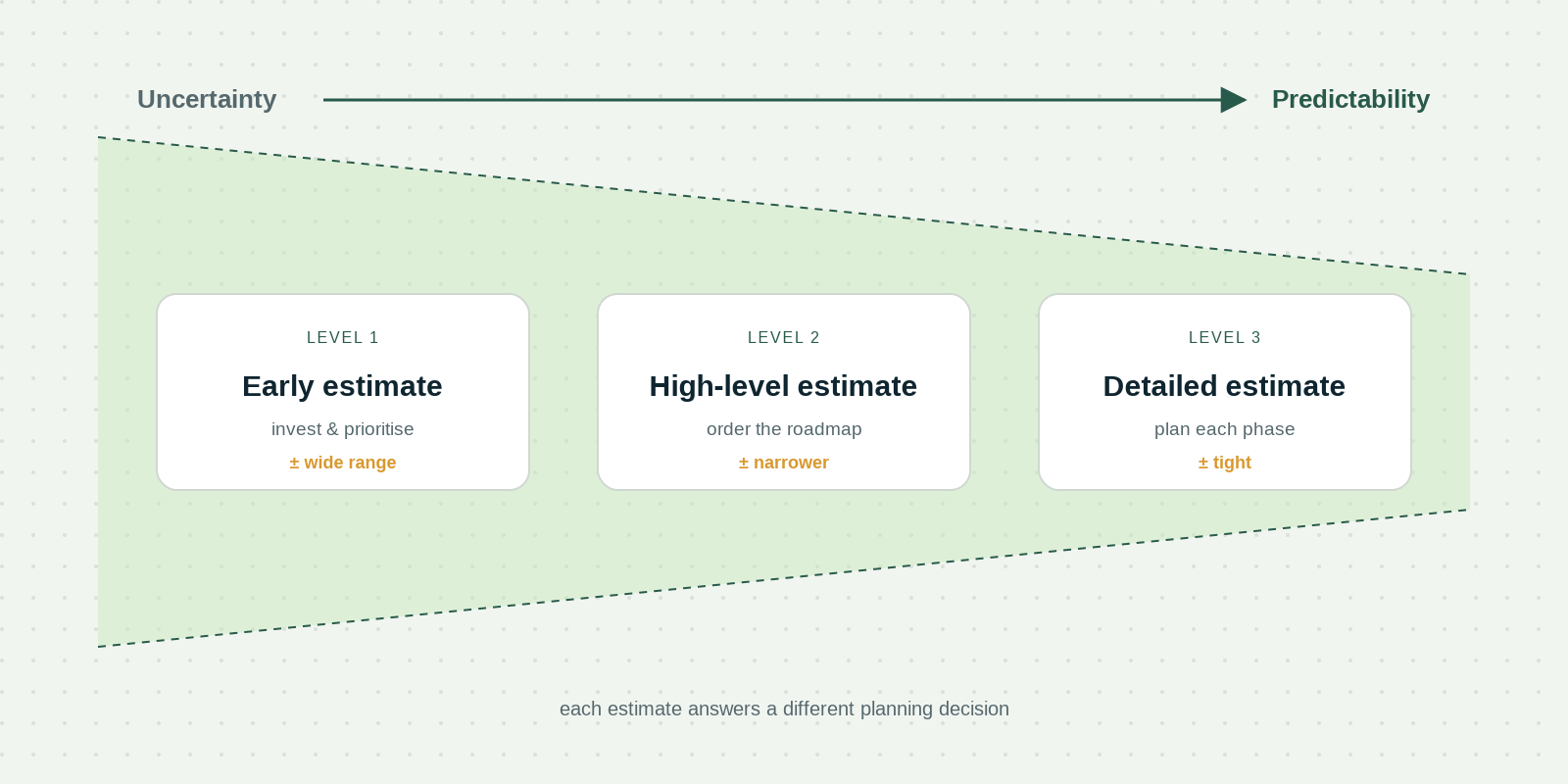
SMW Music Academy used early, high-level, and detailed estimates for different planning decisions.

A customer's balance dropped by a penny. Nothing was lost, nothing was stolen, and the client was still right to escalate it.
A routine capacity change turned every nightly batch job into two. It took thirteen hours to show up, and a timestamp to prove.
How a rewrite that passed every functional test still produced financial records that quietly drifted apart.


The upgrade required work on dependencies, configuration, database changes, and deployment.