

Process & Strategy
Work Breakdown and Critical Path Estimation at SMW Music Academy
How engineering teams convert strategic estimation into reliable, quantifiable delivery forecasts using WBS, complexity scoring, critical path analysis, and capacity-based planning.
Project Overview
Building on the strategic estimation framework from Part 1, this companion piece dives into how engineering teams convert business-level estimates into reliable, quantifiable delivery forecasts. Through Work Breakdown Structures, bottom-up estimation, complexity scoring, risk-adjusted buffers, critical path analysis, and team capacity planning, this methodology transforms assumptions into practical delivery timelines, making estimation measurable, repeatable, and predictable across projects.
Engineering Estimation as a System
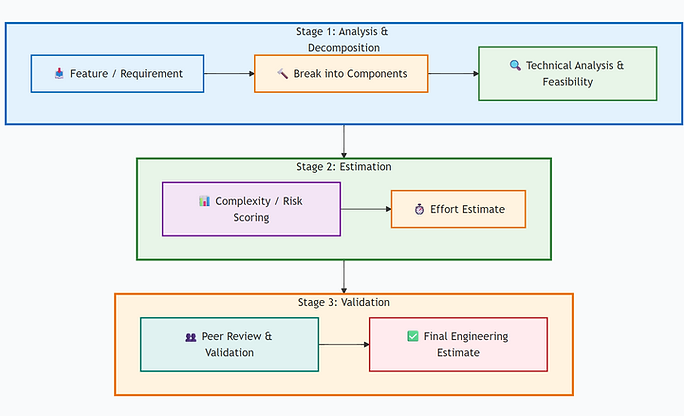
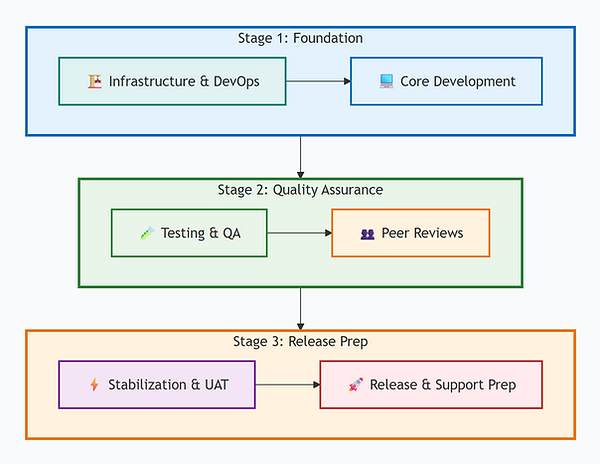
Estimation is not a single activity, it is a pipeline. Each stage feeds the next: requirements decompose into tasks, tasks get scored for complexity, dependencies map the critical path, and real team capacity converts effort hours into calendar dates. The diagram below illustrates how these layers connect into a single, repeatable system.
Work Breakdown Structure & Estimation Data
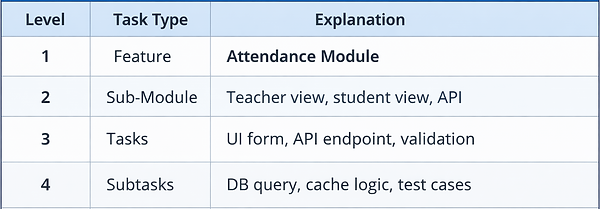
Abstract features cannot be estimated accurately. The first step is decomposing every requirement into small, measurable work units, API endpoints, DB schema changes, validation logic, unit tests, and review cycles. The table below shows a sample breakdown with effort estimates per task category, making scope visible and assumptions explicit.
Complexity-Based Scoring
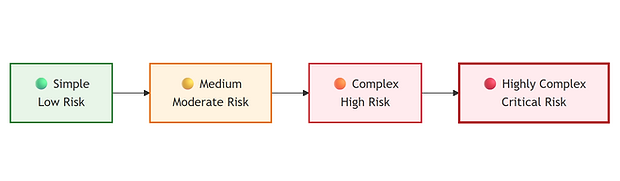
Not all tasks carry equal risk. Each work unit is evaluated across four dimensions (logic complexity, integration count, state management difficulty, and data dependency depth) and assigned a score. A dynamic risk buffer of 10–40% is then applied based on the number of unknowns, such as legacy code entanglement or undocumented third-party APIs.
Technical Dependency Mapping
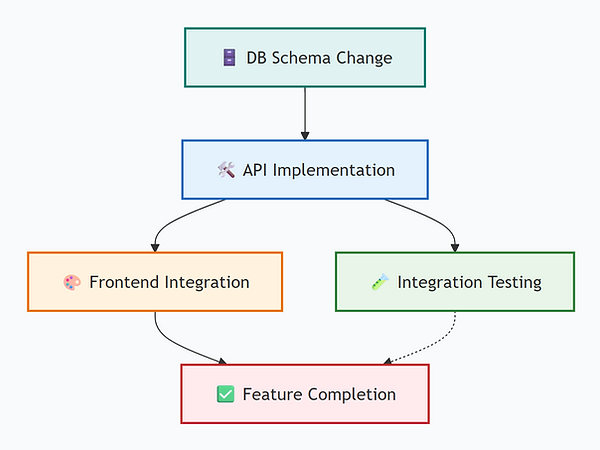
Understanding which tasks block others is critical to accurate scheduling. Dependency mapping surfaces the critical path, the chain of tasks that directly determines the earliest possible delivery date. Identifying bottlenecks before execution allows the team to parallelize work, front-load risky tasks, and allocate senior resources where they matter most.
Effort Layer Model & Capacity Planning
Estimates that only account for development time consistently miss deadlines. The Effort Layer Model distributes hours across the full delivery lifecycle, development, QA, DevOps, security review, and documentation. Team capacity is then applied (accounting for meetings, code reviews, and sprint interruptions) to convert raw effort hours into realistic calendar timelines.
Client Objectives
The engagement was guided by clear objectives that defined success for business leadership and delivery teams.
Structured Decomposition
Convert abstract feature requirements into quantifiable work units using Work Breakdown Structure and bottom-up estimation.
Complexity-Aware Scoring
Apply systematic scoring models that account for logic complexity, integrations, and refactoring effort.
Capacity-Based Timelines
Translate effort hours into realistic calendar timelines using team capacity and critical path analysis.
The challenge
Complex constraints hindering growth
Abstract Requirements
High-level business requirements needed to be decomposed into measurable, estimable engineering tasks, a gap that caused inaccurate timeline projections.
Hidden Complexity
Tasks appeared straightforward but carried hidden complexity in integrations, state management, data dependencies, and performance requirements.
Dependency Bottlenecks
Sequential task dependencies created critical paths where delays in early tasks cascaded across the entire delivery timeline.
Capacity Misalignment
Effort estimates did not account for real team capacity. Meetings, reviews, bug fixes, and sprint interruptions consumed significant productive hours.
The solution
Engineering Estimation Pipeline
A systematic approach converting strategy into reliable engineering forecasts through decomposition, scoring, risk adjustment, and capacity planning.
Work Breakdown Structure (WBS)
Each feature is decomposed into small, measurable units: API development, DB schema changes, validation logic, tests, and reviews. The smaller the task, the more accurate the estimate.
- Task Decomposition
- Bottom-Up
- Measurable Units
Complexity Scoring & Risk Adjustment
Tasks are evaluated on logic complexity, integration count, state management difficulty, and data dependencies. A dynamic risk buffer (10-40%) is applied based on unknowns like legacy dependencies and third-party APIs.
- Complexity Matrix
- Risk Multipliers
- Dynamic Buffers
Critical Path Analysis
Technical dependency mapping identifies the chain of tasks that determines the delivery date. Understanding the critical path enables optimized sequencing, bottleneck identification, and resource allocation.
- Dependency Mapping
- Bottleneck Detection
- Sequencing
Effort Layer Model & Capacity Planning
Estimates cover the full delivery lifecycle: development, testing, DevOps, security, and documentation. Team capacity (accounting for meetings, reviews, and interruptions) converts effort hours into realistic calendar timelines.
- Full Lifecycle
- Team Capacity
- Sprint Planning
Technologies Implemented
- Next.js
- NestJS
- 6
- Estimation Techniques
- 3-Layer
- Review Validation
- 10-40%
- Risk Buffer Range
- Repeatable
- Estimation Outcomes
Business impact
Measurable Engineering Outcomes
Systematic estimation converted subjective opinions into quantifiable, repeatable delivery forecasts.
Budget Accuracy
- Quantified
- Effort per task via bottom-up estimation
- Reduced
- Budget overruns through risk buffers
Delivery Reliability
- Realistic
- Timelines based on team capacity
- Identified
- Critical path bottlenecks before execution
Predictable Planning
- Transparent
- Communication between engineering and business
- Repeatable
- Estimation framework across projects
How we drive results
Turning Strategy into Measurable Business Impact
Our case studies reflect a consistent delivery model focused on outcomes, helping organizations modernize technology, reduce risk, and accelerate growth through practical, scalable solutions.
Outcome-Driven Strategy
Every engagement starts with clear business objectives, success metrics, and a roadmap aligned to real operational and financial outcomes.
Proven Execution Model
We apply proven frameworks, agile delivery, and industry best practices to execute complex initiatives with speed, quality, and predictability.
Secure & Scalable Delivery
Our solutions are built with security, compliance, and scalability at the core, ensuring long-term resilience and sustainable growth.
Ready for Predictable Engineering Delivery?
From abstract requirements to reliable timelines, let us bring engineering discipline to your estimation process.
Start the Conversation